
Difference Between High Court and Supreme Court in India
The Indian judicial system is based on a clear hierarchy designed to ensure justice at every level. When discussing the distinction between the High Court and the Supreme Court, it is important to recognise that both courts serve important roles but operate at different levels within the judicial hierarchy in India.
This guide explains the difference between the High Court and the Supreme Court in a simplified yet authoritative way. Legal professional Karan S. Thukral gives a practical understanding of their powers, jurisdiction, and constitutional roles.
What is the Supreme Court of India?
The Supreme Court of India is the highest judicial authority in India. Established under Article 124 of the Constitution of India, it serves as the final court of appeal. Its decisions are binding on all other courts in India.
Key features of the Supreme Court:
Apex court within the judicial hierarchy in India
Final authority in constitutional interpretation
Hears appeals from High Courts
Resolves disputes among states and the central government
Protects fundamental rights under Article 32
Understanding the difference between the High Court and the Supreme Court starts off with recognising the Supreme Court's national authority.
What is a High Court?
A High Court is the highest judicial body at the state or union territory level. Every state in India has its own High Court, although some High Courts serve multiple states.
For example, the Delhi High Court exercises jurisdiction over the National Capital Territory of Delhi.
Key functions of a High Court:
Highest court within a state or union territory
Supervises subordinate courts within its jurisdiction
Exercises original and appellate jurisdiction
Issues writs under Article 226
When analysing the distinction between the High Court and the Supreme Court, the territorial limitation of High Courts is a prime distinction.
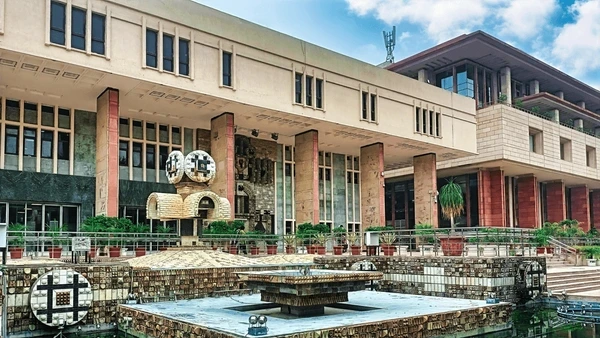
Key Difference Between High Court and Supreme Court
The difference between the High Court and the Supreme Court can be understood clearly through the following comparison:
Position: Supreme Court is the Apex court of India; High Court is the highest court in a state/UT
Jurisdiction: Supreme Court has nationwide jurisdiction; High Court is limited to its state/UT
Final Appeal: Supreme Court is the final appellate authority; appeals from High Courts lie to the Supreme Court
Retirement Age: Supreme Court judges retire at 65 years; High Court judges at 62 years
Writ Powers: Supreme Court under Article 32; High Court under Article 226
Constitutional Authority: Supreme Court has broad and final authority; High Court is subject to Supreme Court review
This clearly highlights the High Court vs Supreme Court powers and structural variations.
Jurisdiction: National vs State Authority
One of the most essential factors of the difference between the High Court and the Supreme Court is jurisdiction.
Supreme Court Jurisdiction India
The Supreme Court exercises:
Original jurisdiction in disputes among states or between state and union
Appellate jurisdiction in civil, criminal, and constitutional matters
Advisory jurisdiction under Article 143
Writ jurisdiction for enforcement of fundamental rights
High Court Jurisdiction India
High Courts exercise:
Original jurisdiction in certain civil and criminal matters
Appellate jurisdiction over subordinate courts
Supervisory jurisdiction over lower courts
Writ jurisdiction for fundamental and legal rights
The Supreme Court's authority extends throughout India, while a High Court's authority is territorially confined.
Appointment and Retirement of Judges
Another essential distinction between the High Court and the Supreme Court lies in judicial appointments and retirement age.
Supreme Court Judges
Appointed by the President of India
Consultation with the Chief Justice of India and senior judges
Retirement age: 65 years
High Court Judges
Appointed by the President of India
Consultation with the Chief Justice of India and the Governor of the concerned state
Retirement age: 62 years
This structural distinction reinforces the higher constitutional status of the Supreme Court.
Writ Powers: Article 32 vs Article 226
Both courts can issue writs including Habeas Corpus, Mandamus, Prohibition, Certiorari, and Quo Warranto.
However, the distinction between the High Court and the Supreme Court becomes apparent in scope:
Article 32 empowers the Supreme Court, especially for the enforcement of fundamental rights.
Article 226 empowers High Courts for both fundamental rights and other legal rights.
While High Courts may have broader writ scope within their territory, the Supreme Court remains the final interpreter of constitutional rights.
Similarities Between High Court and Supreme Court
Despite the distinction between the High Court and the Supreme Court, both courts:
Interpret and uphold the Constitution
Deliver judgments in civil and criminal cases
Protect individual rights
Exercise judicial review
Form fundamental components of the Indian judicial system
Both institutions uphold the rule of law and democratic governance.
Why Understanding This Difference Matters
Understanding the difference between the High Court and the Supreme Court is crucial for:
Law students and judicial aspirants
UPSC and state examination candidates
Litigants seeking clarity on appellate remedies
Citizens trying to understand constitutional structure
It clarifies where appeals lie, how constitutional interpretation works, and how judicial checks and balances function in India.
Legal professionals like Karan S. Thukral regularly emphasise the importance of understanding judicial hierarchy in India before pursuing litigation or constitutional remedies.
Frequently Asked Questions
Q1. Can a High Court overrule the Supreme Court?
No. Decisions of the Supreme Court of India are binding on all High Courts and subordinate courts.
Q2. Which court is the final authority in India?
The Supreme Court of India is the final judicial authority in India.
Q3. Do both courts handle civil and criminal cases?
Yes. Both High Courts and the Supreme Court can adjudicate civil and criminal matters within their respective jurisdictions.
Conclusion
The difference between the High Court and the Supreme Court primarily lies in hierarchy, jurisdiction, authority, and constitutional powers. While the High Courts are the highest courts within states, the Supreme Court stands at the apex of the Indian judiciary with nationwide authority and the final appellate jurisdiction.
Understanding this distinction is essential for students, professionals, and citizens navigating the legal system. This comprehensive guide simplifies complicated legal structures while retaining constitutional accuracy and clarity, reflecting the expert insight of Karan S. Thukral.
Looking for a lawyer in Delhi NCR? Contact Advocate Karan Singh Thukral today!
📞 Call/WhatsApp: +91-99990-09339
📧 Email: infothukral@gmail.com
🌐 Website:
www.karanthukral.com
Contact Now
